Pitchfork’s New Paywall Isn’t Killing Music Journalism
by Sloane DiBari, Opinions Editor
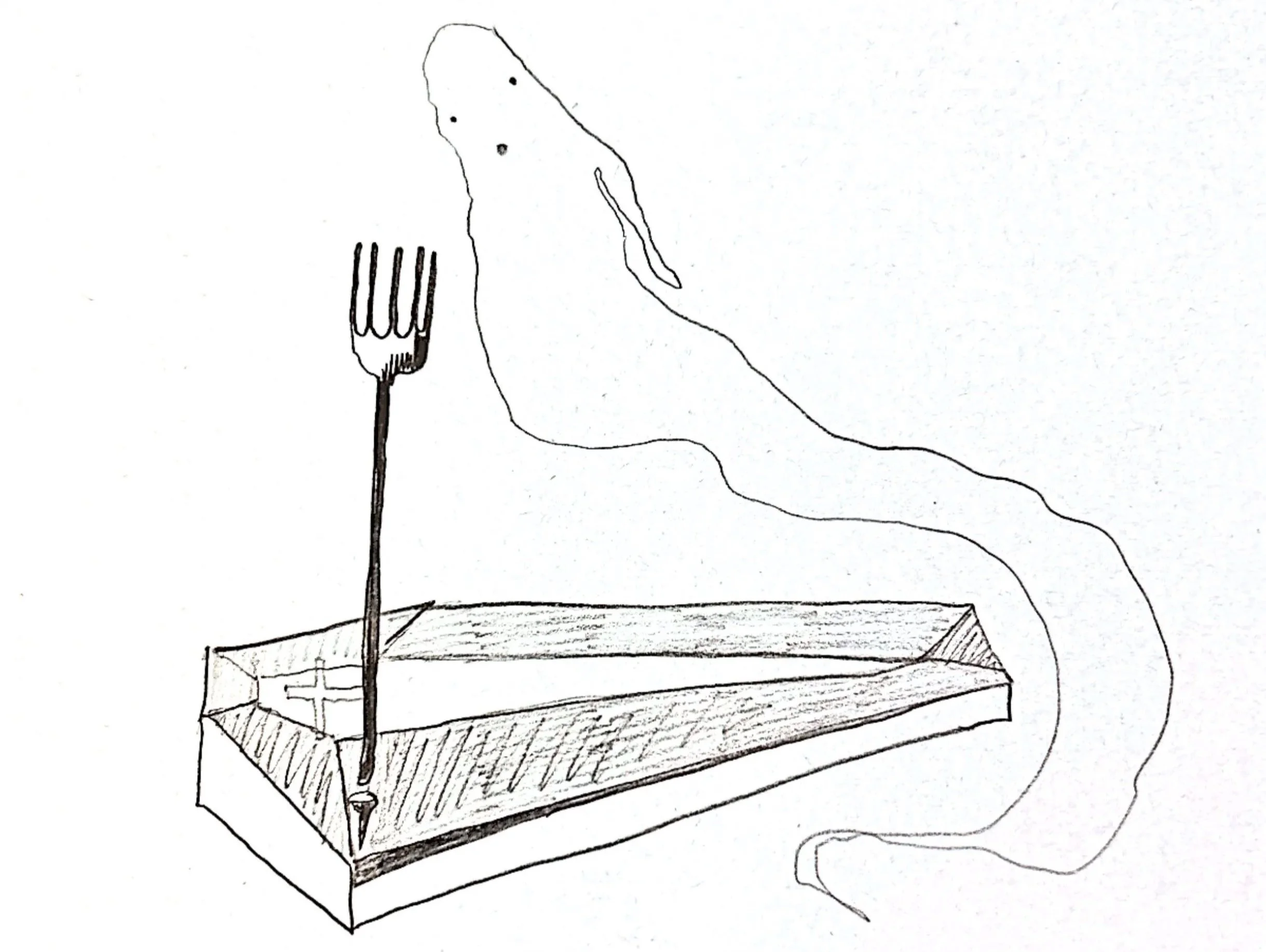
Illustration by Frances McDowell, Layout Assistant
On January 20, 2026, Pitchfork put the nail in music journalism’s coffin.
Just kidding. It’s not that serious. But the occasion is kind of momentous: After three decades of being 100% free to read, Pitchfork has launched a subscription plan. For just $5 a month, subscribers can access unlimited reviews (including Pitchfork’s full review archive), comment on reviews, and rate albums on Pitchfork’s classic 0.0–10 scale. Once more than five readers have rated an album, an aggregate reader score will appear under Pitchfork’s score on the review. Non-subscribers can still read four reviews per month, and may continue to access all other sections (Columns, News, Features, etc.) on an unlimited basis.
Of course, an army of Substack warriors and the great minds of Music Reddit and Twitter immediately came out of the woodworks to comment on everything from “paywall fatigue” to the questionable value of reader scores to the fact that Pitchfork is literally dead, which means that music journalism is literally doomed forever.
To see what all the fuss was about, I made what will hopefully be just one $5 payment to Pitchfork and explored the world behind the paywall. I gave myself a dumb username and went to score some albums, starting with the Femcels’ I Have to Get Hotter (I gave it a 7.2, compared to Pitchfork’s 7.6 and 24 readers’ average of 7.7). I scrolled through the comments sections of various reviews only to see scores with no verbal comments attached for the most part—so much for subscribers being “in dialogue with [Pitchfork’s] critics and each other.” There’s virtually no juicy discourse to be found anywhere thus far: After scrolling through dozens of reviews, the vast majority of reader scores appear to generally be just a few tenths of a point lower or higher than Pitchfork’s. Despite every score and comment being attached to a username, there is no profile interface where subscribers can view all of their scores, or other subscribers’ scores, in one place. The features of this subscription plan seem designed for me specifically, and I was bored within minutes of the hours of scrolling I committed to this stupid article.
To raise an obvious question: Why would anyone pay to be able to rate albums on Pitchfork when they can use sites like RateYourMusic, Album of the Year, and, I don’t know, Metacritic for free? Not that anyone would trade Pitchfork usernames with their friends anyway, but what is the point of instating this user rating system when the social and cataloging features that attract users to these kinds of rating platforms are almost totally absent?
Pitchfork isn’t a comprehensive database of recorded music to be rated and cataloged by users who are also using the site to compare their taste to the tastes of others. As cringe as this feels to write, Pitchfork is undeniably one of the most influential music (and, more broadly, arts and culture) publications in recent history. It has, at least for some period of time, served as an unrivaled authority on popular music. It could end Travis Morrison’s once-illustrious career just as easily as it could start Arcade Fire’s. At the core of its signature brand, arguably, was that it leaned into its unwieldy influence. Pitchfork loved being snobbish and snappy and, let’s be honest, insufferable. It relished being hated for being right.
In the fateful announcement, Pitchfork Head of Editorial Content (and founder and editor-in-chief of cult favorite independent music blog No Bells) Mano Sundaresan wrote, “We still believe in the authority and, to be honest, the primacy of Pitchfork’s taste—but we want to publish our readers’ taste and opinions, too. The comments section will be moderated by our editors and adhere to our new Community Guidelines.”
What is Pitchfork even trying to do anymore? Who is this Pitchfork that “believes in the authority and primacy” of their taste but also wants to entertain and platform other people’s opinions—and then filter those opinions through their editors, no less? Who is any of this actually for?
I don’t actually care that much, in theory, about shelling out $5 a month for unlimited access to a publication I love to read. Yeah, sure, whatever, I have no idea where my money is actually going, maybe it’s just lining Condé’s pockets and not a penny of it will go toward even one writer’s however many cents per word, and so on. The virtue of accessibility that paywalls like Pitchfork’s undermine isn’t lost on me, either. But I can certainly get behind the principle, at least, of doing just a little more to make writing a livable career (LOL) for people working in a discipline I find to be culturally important. (This also surely won’t stop many readers from simply bypassing the paywall with free- and easy-to-use websites and browser extensions.)
Still, with a paywall that a relatively small number of readers will care enough to bypass, Pitchfork has officially conceded what was left of their tastemaker status in what may be the final white flag they raise to Condé Nast. It’s really a shame, with all of the great writers who they’ve featured on a regular basis over the past few years: columnist Kieran Press-Reynolds, Grace Robins-Somerville, Eli Enis, etc.
But all of this hand-wringing about The Death of Music Journalism that inevitably comes about every time Pitchfork announces something disappointing is, for the most part, myopic alarmism. These writers, among others, are leading the new generation of tastemakers in an era of renewed interest in music criticism, and they’re doing it through their own indie music blogs. This could very well be chalked up to my living in the Oberlin bubble, but I can name several people who run in my circles (and myself!) whose tastes are actively being shaped by Enis’ independent blog, Chasing Sundays. A not-insignificant number of young people are getting sick of Spotify suggestions and looking to music writers for music discovery again. There’s something amazing happening in this field, and yet all so many of us care about is declaring Pitchfork irrelevant while still talking about it constantly, because music fans no longer obsess over Pitchfork as a tastemaker but as a relic of one, an emblem of the Death of Culture or whatever. Pitchfork isn’t killing music journalism, because Pitchfork is no longer synonymous with the medium of music journalism. It’s just killing itself.