#OscarsShow
by Adi Horodniceanu, Contributor
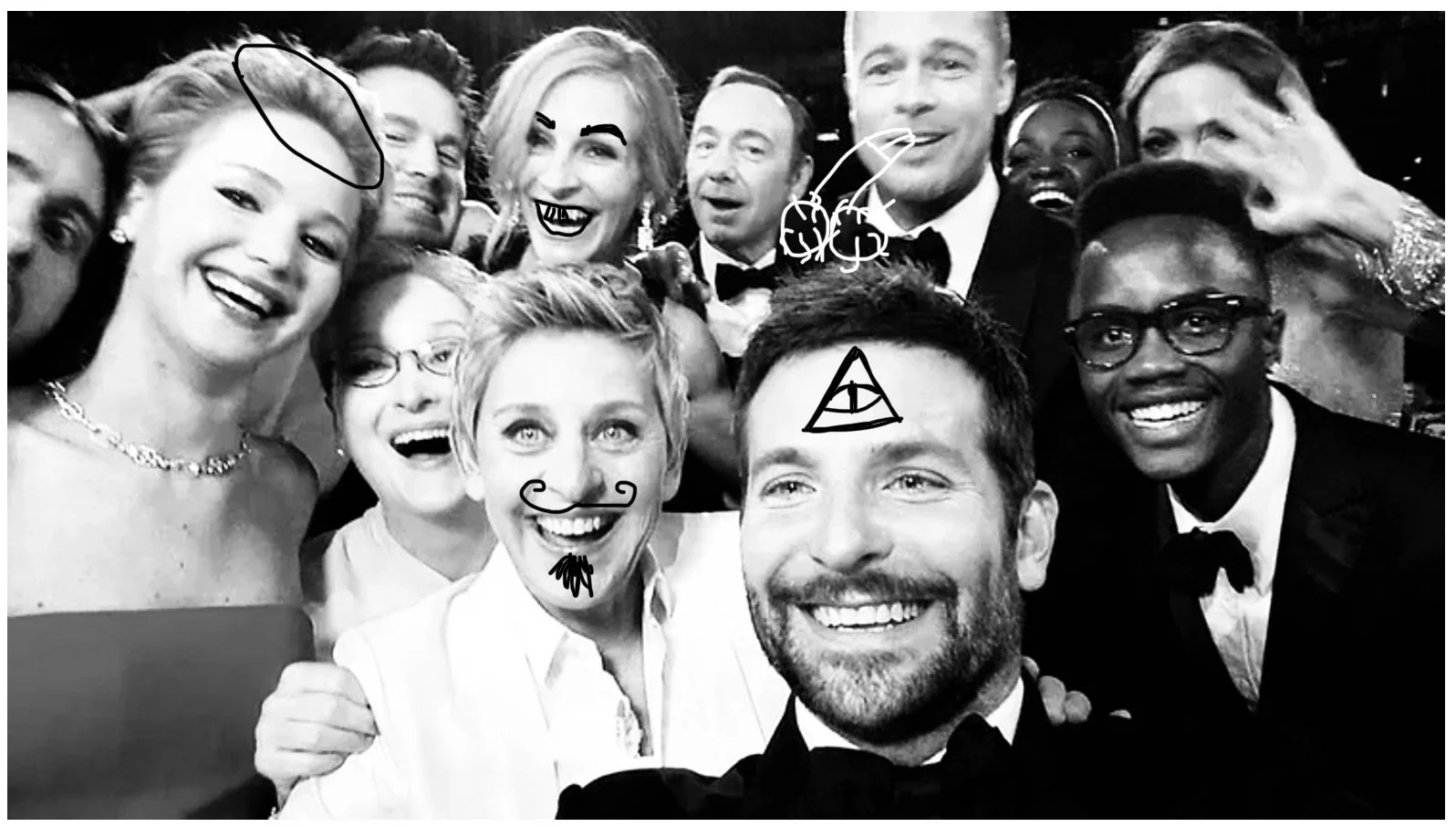
Illustration by Emila Shuncan, Layout Editor & Assistant
In 2002, as Ron Howard shook his Oscar statue triumphantly in the air after winning Best Director for A Beautiful Mind, two titans of cinema, Robert Altman and David Lynch, stood together clapping in the audience. Both had been nominated in the category that year–Altman for Gosford Park and Lynch for his masterpiece Mulholland Drive. There’s a story that Lynch later recounted about this moment that can be seen in the actual broadcast, where Altman consoles him. He said that Altman leaned into his ear and said, “It’s better this way, David.”
Today we know this to be true, as Mulholland Drive dominates many ‘Century’s Greatest’ film lists, and is thought of by many as Lynch’s magnum opus. As such, it’s safe to say that the Oscars have a history of failing to recognize many of the 20th century’s greatest filmmakers; Stanley Kubrick, Orson Welles, and Alfred Hitchcock never won Best Director. Winning an Oscar, a glowing, golden award at the biggest and oldest international entertainment forum, should mean something. It does mean something. But maybe a director’s status as one of the greats, shaped outside of the industry’s imposing eye, makes someone all the more legendary.
Recent cultural memory surrounding the Oscars is, to put it generously, messy. Geriatric announcers misread the Best Picture cards. GI Jane jokes are made, and people are slapped. Naked John Cena anybody? I’ve laid out some loosely related points here–the Academy’s historical inability to memorialize filmmaking that proves to be culturally significant later, the ‘snubs,’ the gags. Ever heard of Oscar Bait? Why do you think so many movie releases are packed into the last weeks of December, vying for a fresh spot in Academy voters’ minds? I digress. Not to sound all conspiratorial about it, but the Capital I Industry functions like a big echo chamber; a network of industry voters choose what’s nominated, what’s nominated subsequently influences box office sales, and high performing films direct the industry as to what types of films to fund moving forward. So when a really special film slips in and wins, it informs our collective understanding of what kinds of films can win moving forward (take, for instance, Everything Everywhere All At Once, a frenetic, colorful, multiverse, relatively low-budget, immigrant story.)
Our Best Picture nominees this year are as follows: The Secret Agent, Bugonia, Marty Supreme, Train Dreams, F1, Sinners, Frankenstein, Hamnet, One Battle After Another, and Sentimental Value. I have seen all 10 of these films. Save yourself the trouble of watching F1, Frankenstein, and Hamnet. Basically everything else is good to really great–and if you watch a single film from this bunch, make it Sinners. While not totally aligned with my personal taste, (Sentimental Value is my favorite here, and It Was Just An Accident and If I Had Legs I’d Kick You are my favorites of the year at large) it is undoubtedly incredible; having earned 16 nominations, the most in Oscars history. It bears no resemblance to EEAAO aside from being a genre bending epic that feels legitimately fresh and isolated from its contemporaries of similar budgetary strata. The film serves as a shining example of what a Hollywood blockbuster should be, and is a fascinatingly original synergy of gothic horror, musical, and Black history—it fleshes out a breathing, fiery world, which sucks you in and expels you just as quickly. Outside of its achievements on the filmic level, a win for Sinners would make history as being the third film by a black director to win Best Picture.
The directors I included in my list of historical Oscars snubs are all white and of the Anglophone world, all men, and all had films that flopped in profound ways. All were allowed to fail, and try again; chances came to them in abundance within an industry that rewarded people like them. They were allowed to take risks and given big budgets (Lynch’s Dune, his self-proclaimed worst film, was the highest budget film ever at the time), and when risky films yielded great success, the cycle continued. We were shown commercially that a story like Sinners can be massively successful (it made 369 million in box offices globally), but winning an award is symbolic of something larger than commercial success. It implores the Industry in a formal way that not only the audiences, but the insiders, are interested in newness rather than redux.
Lynch is one of my favorite directors and extremely important to me, and it was undoubtedly better for him to have lost the Oscar that night in 2002, as an artist working outside the mainstream who penetrated inwards. But systemic change, greater representation within American film, and holistically better artistic production may be aided by some formal nods to work operating outside of the mainstream. Of course Sinners is, in fact, mainstream, but I am referring more specifically to the types of storytelling that it represents. When boiled down, outside of the memes and performances, the yearly Oscars Twitter discourse and Youtube video essays, what takes place at the top trickles down.