by Zoe Brunk, Staff Writer
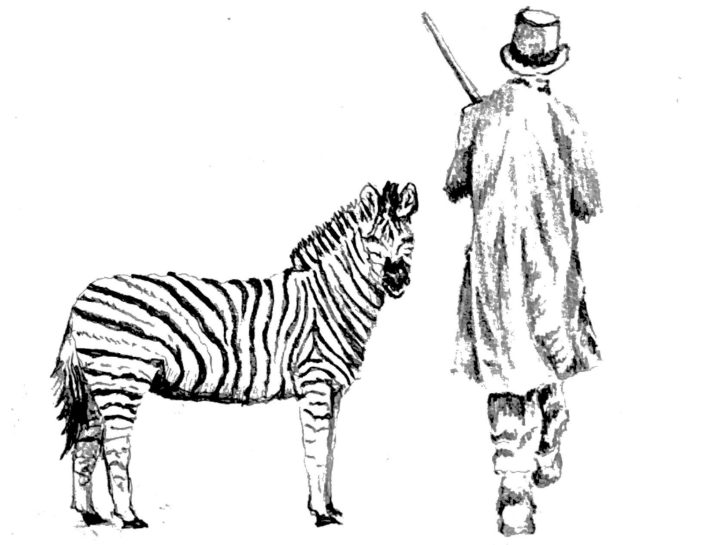
Illustration by Eila Duncan, Layout Assistant
In my time at Oberlin, there have been many Instagram accounts that document Obie outfits. Indeed, it seems almost a rite of passage. My friends and I started @obieslovecolorpaletting, an account that required an introspective eye and the ability to capture perfect moments of color alignment, during our first semester at school. A few months in, we discovered @bitcheslovecolorpaletting, the grown-up, more heavily-followed version of our own account, and promptly went inactive. There is the ever-active @oberlin_stripes, as well as several other accounts capitalizing on polka dots, monochrome outfits, and the like, that come and go. Whatever the focus, starting an Oberlin-wide Instagram account seems to be one way that freshmen find to make their mark on Oberlin and let their presence be known.
Yet one account has consistently occupied my Instagram homepage: @oberlin_matching. This account documents the general matching of Oberlin students. Recently, there has been debate over the intentionality of the matching featured on the account, with there being much documentation of Oberlin students matching not with other students, but with inanimate objects. Exhibit A: a student and a large, electric fan on the 31st of October; an upturned bicycle on the 28th, pictured with a student lying on their back with legs and arms in the air (kind of like a beetle on its back), a stack of colorful bins, also on the 28th, looming behind a student; and a book on the 15th, with the word “Frog” on its spine, next to the shirt of a student that also said “Frog”; the list goes on. I have heard complaints that often in these posts, “students are barely matching,” and I myself have come to question if this account really depicts the pinnacle of matching. Yes, the examples above are comical standouts, but other critiques that have come to my attention are about the outfit-matching itself. A plain white tee and blue jeans does not a match (worthy of a post) make. Or does it?
I am determined to address the concerns of my fellow Instagram users throughout this article. I’ve collected some commentary from a significantly questionable match on the 26th of October, remarks like, “Where da match,” “what could possibly be matching,” “delete this,” “the fuck is this,” and “take this down” really exhibit Oberlin students’ passion for accurate matching. Questions are being raised about this self-proclaimed master of matching, and this pressing issue demands investigation.
To explore the ideals of @oberlin_matching, I will first address @oberlin_notmatching, a quite recent account that documents moments of Oberlin students looking different (not drastically different, just definitely not the same). The account’s bio boasts: “Not matching is beautiful.” Could this be a direct message about the core ideal of @oberlin_matching? A fight against sameness? Or perhaps, a mockery of the account, as, often, the outfits of those featured in the account just don’t seem to match. Whatever the intent, it raises a question about the importance of matching itself. Is rewarding matching moving us one step closer to wanting every student to be the same? A dangerous prospect.
I look then to the @oberlin_matching bio for more information. It relays a statement I find significant, one that changes my perspective on the @oberlin_matching account entirely. It says: “I am not the arbiter of matching. Submit in good faith only. I let the people of Oberlin self-identify their matching. Boom.” “Boom,” indeed, because this surely addresses the account owner’s apparent inability to filter matches. Instead, the responsibility for curating a faithful match is put on not the mysterious figure behind @oberlin_matching, but us. We are to blame for this upset in matching.
Need I remind us what matching is all about? It is spontaneous, it is coincidental and purely unplanned, and it is, above all, abundantly apparent when a match has been made. I implore us to return to our days of proper matching.