A Taxonomy of Zoomer Music, Pt. 1: Cranks and Country Misfits
by Sloane DiBari, Opinions Editor
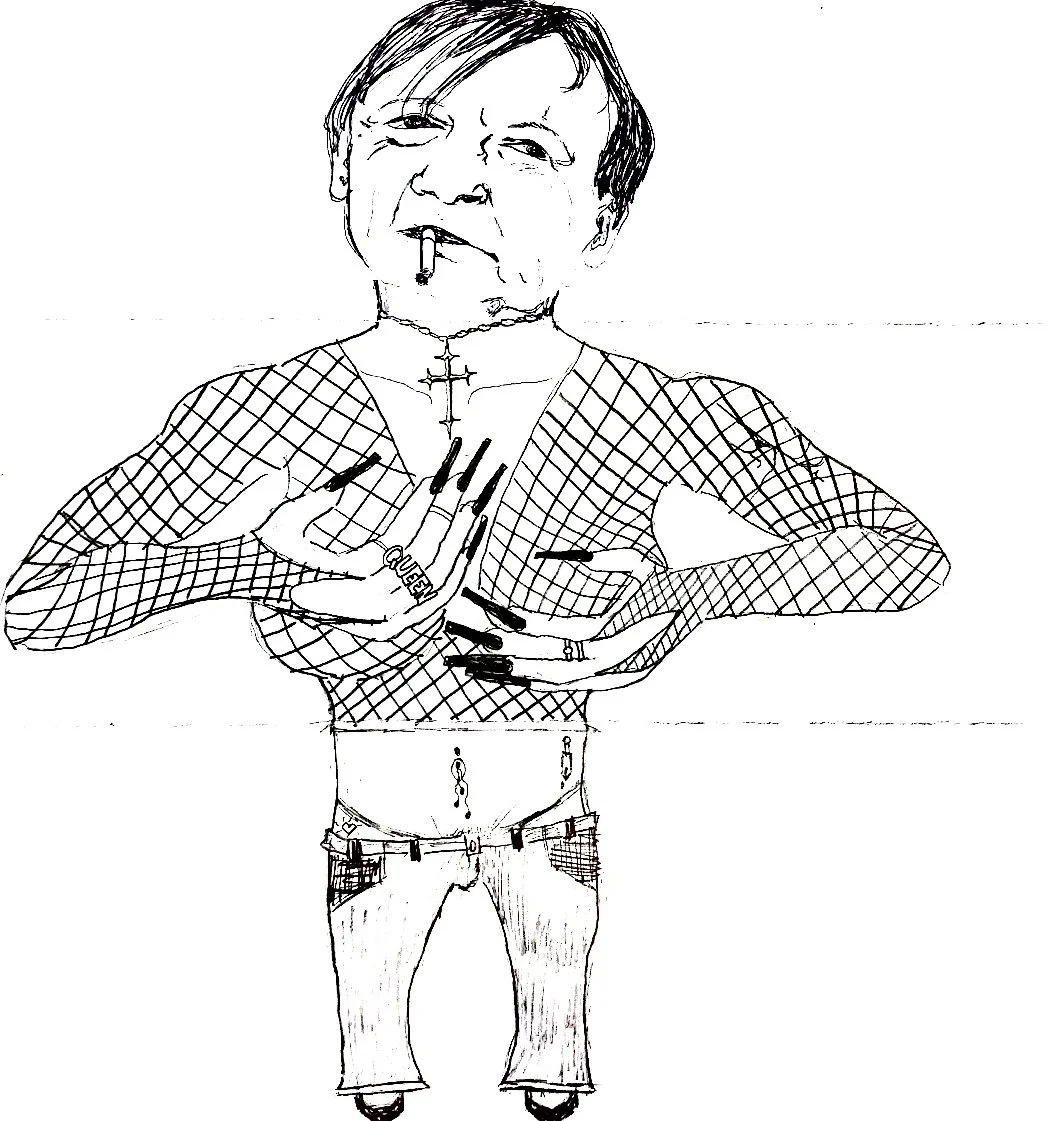
Illustration by Maupilemma
At the risk of sounding like one of those obnoxious Gen Z kids who thinks that we’re the most special, most creative generation ever, the music Zoomers are making is kinda weird! With disparate influences at their disposal thanks to—don’t roll your eyes just yet!—the internet, Zoomers are mashing together everything from black metal to jungle to (too much) shoegaze. I’d love to see some statistics on the frankly nauseating rise of the term “genre-bending” in music criticism in recent years.
What will we remember about the music of the 2020s, really, with all of these genres melting into each other, wildly different but also not particularly different at all, its artists obsessed with categorizing their work at the most granular level imaginable but also with transgressing classification in its entirety? We remember (by proxy, anyway) the 90s for grunge and boom bap and whatever, but are we going to look back on this time and think of digicore and the Windmill Scene? Chappell Roan?
In a likely futile attempt to make sense of Zoomer music, I’m constructing a taxonomy of sorts. I don’t have the space in this issue alone for a truly comprehensive one; this is the start of a larger project. For my purposes, “Zoomer/Gen Z Music” is here defined as music made primarily by people born between 1997 and 2012 (with a few exceptions for those whose ages aren’t public or who are on the Millennial/Gen Z cusp), released no earlier than 2019, and whose sounds and/or attitudes are distinct from those of other generations; impersonation acts like Greta Van Fleet and whatever don’t count. Most categories will have significant overlap of sounds and artists; eclecticism and boundary-blurring are the name of the game.
I’ve decided to get indie rock out of my system first—God knows I need it!
Baby’s First Art Rock: The Zoomer art rock explosion took off around 2019 with the release of black midi’s game-changing Schlagenheim, a storm of brutal riffage and feedback that initiated an uncompromising new generation of art punk and (ugh) arty post-punk and post-rock. Black Country, New Road followed, cheekily calling themselves the “second-best Slint tribute act” and collaborating with black midi before making a sharp departure from their initial sound with the instant-classic Ants from up There in 2022. This movement, sometimes called “post-Brexit new wave,” emerged from London pub and live music venue The Windmill, which cultivated acts including Black Country, New Road, Maruja, Squid, shame, and, of course, black midi. The Windmill Scene and its ilk can be split roughly into the following two groups.
– Chamber Pop–Post-Rock Revival kicked off with Ants from up There, the Funeral–influenced smash hit that set off a chain reaction of Windmillaboos across the pond. Taking cues from Black Country, New Road’s shift towards chamber pop and the crescendocore of 2000s post-rock legends Godspeed You! Black Emperor, young and earnest American bands like Friko and Racing Mount Pleasant are playing some very pretty horns over flowery arrangements with a little noise here and there and stealing the hearts of artsy Gen Zers everywhere.
Two Defining Songs: The Place Where He Inserted the Blade – Black Country, New Road, Racing Mount Pleasant – Racing Mount Pleasant
– Crank Wave is dark, pessimistic, and abrasive, privileging gloomy guitars, vocals often spoken in the vein of the Fall, highly technical instrumentation, and progressive songwriting. Featuring bands like Maruja, Squid, and shame, Crank Wave is marked by a heterogenous incorporation of sounds ranging from jazz fusion to noise rock to prog to krautrock. Like Black Country, New Road (themselves Crank Wave graduates), the Cranks have spawned their own Windmillaboos, most notably Geese before their rough-and-tumble, decidedly American 2023 album 3D Country (see Gentrified Brooklyncore below). The kids and the critics love it, and maybe people like me who find it generally gimmicky and annoying are just stuck in the past.
Two Defining Songs: bmbmbm – black midi, Science Fair – Black Country, New Road
Neo Alt-Country and Americana: In a post-Jason Molina (rest in peace), post-Springsteen, post-Wilco world, the new generation of indie kids are listening to their dads’ CDs, plugging in a gazillion guitar pedals, and getting down to business. Country, Americana, and heartland rock are coming back in a big way, and Zoomers are finally giving it all a chance.
– Wednesdaypilled MJ Lendermaxxers make up the wave of bands following Wednesday and MJ Lenderman’s lead: noisy, fuzzy, down-and-dirty alt-country. Lenderman is to the 2020s’ alt-country explosion what Eddie Vedder was to post-grunge, except instead of inspiring Nickelback, which sucked, Lenderman is giving us guys like Greg Freeman and Friendship, who are pretty good! Wednesday has proven to be in a league of their own, though. Wednesday is the future of not only this scene but indie rock at large: grimy and uncompromising, yet undeniably tender and earnest, they’re leading the charge in what will hopefully be the next wave of all-time-great indie rockers.
Two Defining Songs: Wound Up Here (By Holdin On) – Wednesday, She’s Leaving You – MJ Lenderman
– Gentrified Brooklyncore features two prevailing acts: Big Thief and Geese (or four, taking into account the smash-hit solo work of respective frontpeople [?] Adrianne Lenker and Cameron Winter). This might seem insane, but bear with me. Both hailing from Brooklyn, neither of these bands has brought about any notable imitators (yet), and they each exist in the same spaces as certain groups of artists despite the fact that they don’t quite fit in like the rest; Big Thief is frequently lumped in with the so-called “sad girl” indie folk of Phoebe Bridgers and the like, and Geese is often associated with the Windmill Scene (see above). Each act has released an album this decade that has been raved about for being weird and new and The Future. They’re just the right kind of freaky to be uber-cool, with their idiosyncratic vocalists and complex, erratic, arty instrumentation that spans neo-psychedelia, Americana, and folk rock, among others. Cameron Winter is yowling about how God is actually real, Adrianne Lenker is spinning strange, naturalistic imagery like “Spud Infinity,” and they’ve got both the Park Slope hipsters making the New York Times’ crispy gochujang miso butter gnocchi and Zoomers across America wrapped around their fingers.
Two Defining Songs: Love Takes Miles – Cameron Winter, Simulation Swarm – Big Thief